Lakota Culture
Beliefs & Traditions
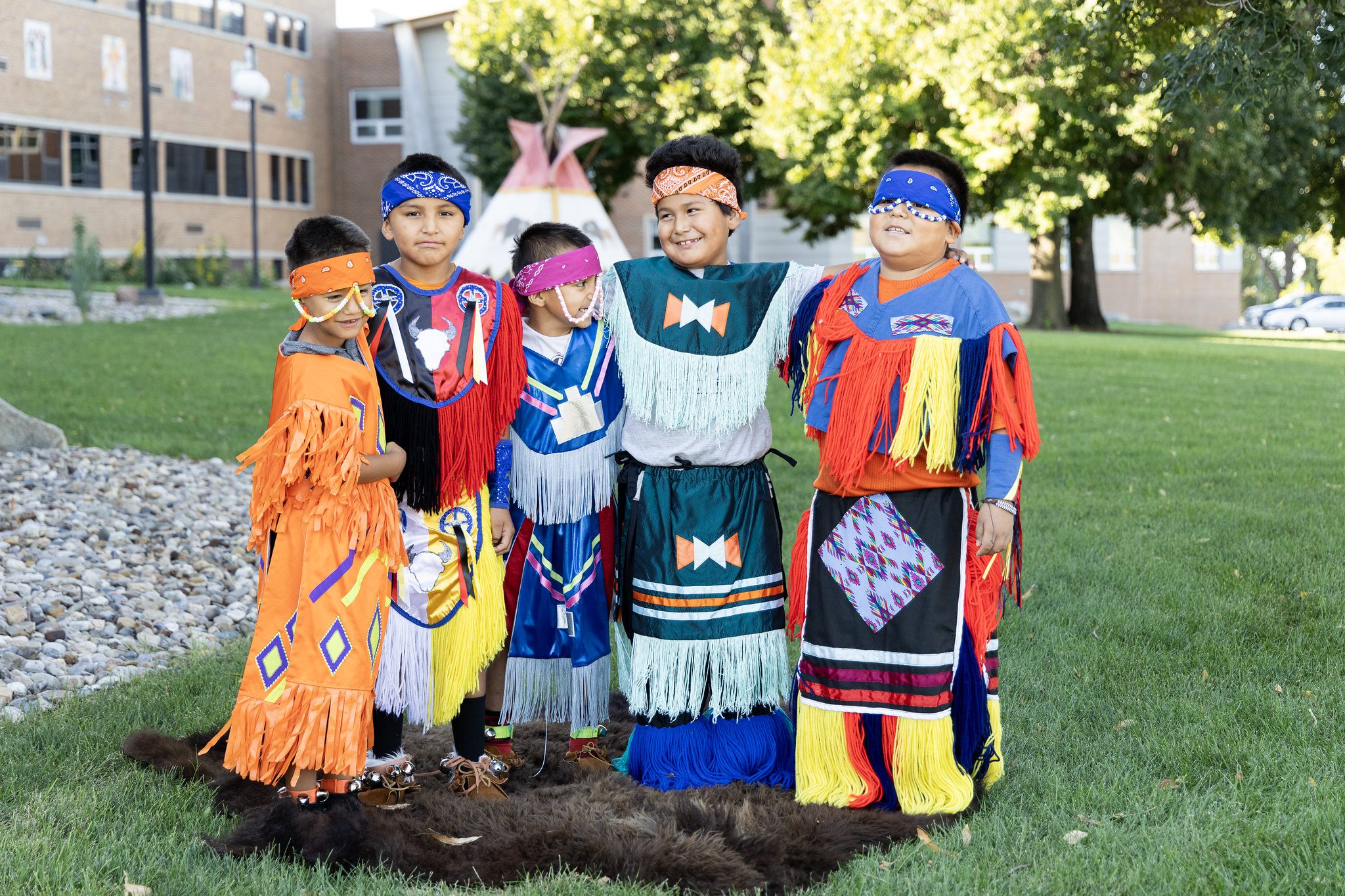
Native American beliefs and values, as in any culture, help shape life-changing decisions and plans for the future. Explore an overview of Native American beliefs and traditions, with a focus on Lakota (Sioux) culture. Like any living culture, these practices continue to evolve, and their meaning can vary among tribes, clans and families.
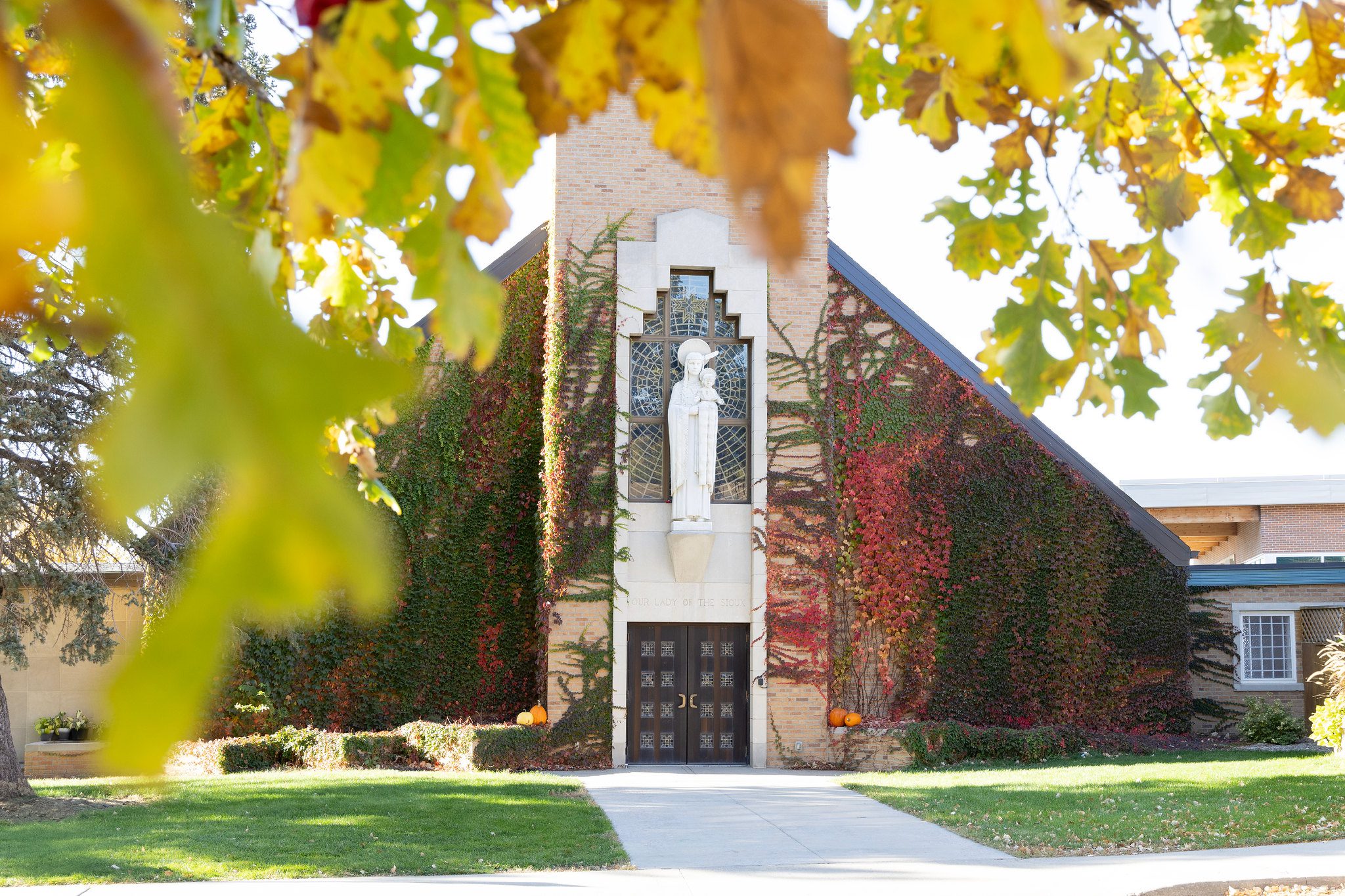
At St. Joseph’s Indian School, our students come from many backgrounds. We welcome children of all faiths, recognizing the dignity of each person created in God’s image. Students are not required to be Catholic or practice traditional Lakota spirituality. Each year, families share their wishes in their enrollment consent packet, and our staff work closely with them to honor those wishes academically, spiritually and culturally.
Explore
Native American Beliefs and Traditions
Seven Lakota Values
Wačháŋtognaka — generosity — means to contribute to the well-being of one’s people and all life by sharing and giving …
Seven Lakota Values
The Lakota word for generosity, means to contribute to the well-being of one’s people and all life by sharing and giving freely. This sharing is not just of objects and possessions, but of emotions like sympathy, compassion and kindness. It also means to be generous with one’s personal time.
Giveaways have always been part of Lakota society. At important events, the family gathers their belongings and sets them out for any person in the community to take. “What you give away, you keep; what you keep you lose,” is an old Lakota saying.
The Lakota word for kinship, is one of the important values coming from the thiyóšpaye — extended family. It includes the ideas of living in harmony, belonging, and as the true wealth and the importance of trusting others. It is one of the values that made the thiyóšpaye work.
For the Lakota, you belong to a thiyóšpaye through birth, marriage or adoption. Your family even extends out to your band and the whole Lakota nation. Whenever you travel somewhere, you can expect to be welcomed and supported as if you were in your own immediate family.
The Lakota were a warrior and hunting society. This meant the men might not return when they went out to fight or to hunt. So, wótakuye — Kinship — ensured the women, children and elders would not be left alone.
The Lakota word for fortitude, means facing danger or challenges with courage, strength and confidence. Believing in oneself allows a person to face challenges. Fortitude includes the ability to come to terms with problems, to accept them and to find a solution that is good for everyone.
Historically, one of the first lessons a Lakota child learned was self-control and self-restraint in the presence of parents or adults. Mastery and abilities came from games and creative play. Someone more skilled than oneself was viewed as a role model, not as a competitor. Striving was for achieving a personal goal, not for being superior to one’s opponent. Success was a possession of the many, not of the few.
The Lakota word for wisdom is wóksape. The knowledge and wisdom of elders are very important for the well-being of the Lakota people. This is understood to be something sought and gained over the course of one’s entire life.
Wisdom has to do with understanding the meaning within natural processes and patterns. It means knowing the design and purpose of life.
It also has to do with understanding and living the spiritual values and beliefs upon which one’s culture is founded and being able to share these with others. Wisdom means being able to incorporate the sacred way of life into one’s own life and to respect and honor all life. It means being open to the dreams of the day and the night when spiritual direction may come to a receptive child or adult seeking wisdom.
The Lakota stress the importance of speaking directly to Tȟuŋkášila — Creator, and to having a close and open relationship with Wakȟáŋ Tȟáŋka — Great Spirit.
They believe Mother Earth is sacred, and so they honor and respect her greatly. They give thanks to the Creator daily through living consciously and by praying to the Great Spirit. The Lakota people believe that the land does not belong to them, but rather that we belong to the land. As such, they recite daily prayers of thanks to Mother Earth and the Great Spirit for all they continue to bless us with and for the great privilege and honor of life.
For people to live together in peace, they have to respect one another. The old are respected for their wisdom, and the young are respected because they are the people’s future. This attitude also means reverence for all other living things in the world.
Care for others as you would yourself because we are all part of this circle of life. Compassion is important to the Lakota people, as they all work together and lean on one another for support and survival. This includes following the values each day and including everyone in daily wóčekiya — prayers.
Four Directions and The Medicine Wheel
As part of the Lakota culture, when people pray or do anything sacred, they see the world as having Four …
Four Directions and The Medicine Wheel
The Meaning of the Four Directions in Native American Culture
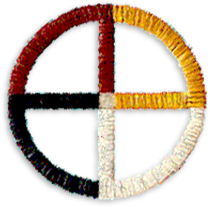
As part of the Lakota culture, when people pray or do anything sacred, they see the world as having Four Directions. From these Four Directions — west, north, east, south — come the four winds. The special meanings of each of the Four Directions are accompanied by specific colors, and the shape of the cross symbolizes all directions. Like many Native American beliefs and traditions, specific details regarding colors associated with directions varies.
West (Black)
To the west, the sun sets, and the day ends. For this reason, west signifies the end of life. As Black Elk says, “… toward the setting sun of his life.” The great Thunderbird lives in the west and sends thunder and rain from its direction. For this reason, the west is also the source of water: rain, lakes, streams and rivers. Nothing can live without water, so the west is vital.
North (Red)
North brings the cold, harsh winds of the winter season. These winds are cleansing. They cause the leaves to fall and the earth to rest under a blanket of snow. If someone has the ability to face these winds like the buffalo with its head into the storm, they have learned patience and endurance. Generally, this direction stands for hardships and discomfort. Therefore, north represents the trials people must endure and the cleansing they must undergo.
East (Yellow)
The direction from which the sun comes. Light dawns in the morning and spreads over the earth. This is the beginning of a new day. It is also the beginning of understanding because light helps us see things the way they really are. On a deeper level, east stands for the wisdom helping people live good lives. Traditionally, people rise in the morning to pray facing the dawn, asking God for wisdom and understanding.
South (White)
Because the southern sky is when the sun is at its highest, this direction stands for warmth and growing. The sun’s rays are powerful in drawing life from the earth. It is said the life of all things comes from the south. Also, warm and pleasant winds come from the south. When people pass into the spirit world, they travel the Milky Way’s path back to the south — returning from where they came.
Adapted from Lakota Life by Ron Zeilinger
Four Directions Prayer
When the Lakota pray with the Sacred Pipe, they add three other directions: Sky, Earth and the Sacred Place Within.
Four Directions Prayer
Voice of the West:
Please stand and face the West.
Look toward the place where the sun goes down.
Your Grandfather is sitting here looking this way.
Pray to Him.
Grandfather sits where the sun goes down and paints his face black.
We ask the thunder beings to be generous with their water
because plants, animals and human beings need water to exist.
May Grandfather grant us the value of generosity
with our time to share with our relatives and friends.
We also want to take only what we need from life
and share with others from our knowledge and plenty.
Voice of the North:
Look toward the northern direction.
Your Grandfather is sitting here looking this way.
Pray to Him.
Grandfather paints his face red like the blood of the buffalo
Whose sacrifice gives life to the people.
Grandfather’s breath is the snow that cleanses the earth
and brings the cold harsh winds of the winter season.
North represents the trials people must endure and the cleansing they must undergo.
If we have the ability to face these winds like the buffalo
with its head into the storm, we have learned patience and endurance.
We ask the buffalo nation to share with us their power and courage
so that we may be able to defend our people, our spirituality, our culture,
our family and ourselves.
We ask for the patience to take care of the little ones as well as the elderly.
(Please be seated).
Voice of the East:
Please stand and face the East.
Look toward the place where the sun rises.
Your Grandfather is sitting here looking this way.
Pray to Him.
He sits where the sun rises and paints his face yellow.
We ask the elk nation to share their power of love with us
so that we may share our love with the environment, all people and our families.
We thank the Morning Star for guidance in our lives so we do not lose sight of our purpose.
Voice of the South:
Look toward the southern direction.
Your grandfather is sitting here looking this way.
Pray to Him.
He sits where the summer resides and paints his face white.
Spirit keeper of the south, show us the path that leads to truth and happiness.
Help us to remember to love and feel compassion for all humankind.
Help us to walk our paths with joy and love for self, for others,
for the four legged, the winged ones, the plants and all creation upon Mother Earth.
Show us it is right to make decisions with our hearts, even if at times, our hearts become hurt.
Help us to grow and nurture our self-worth in all ways.
(Please be seated.)
Voice of the Three Directions:
When the Lakota pray with the Sacred Pipe, they add three other directions: Sky, Earth and the Sacred Place Within.
Look to the sky.
Your Grandfather is sitting here looking this way. Pray to Him. He paints his face blue. We ask the eagle nations to be home so our minds may be able to soar with them. We pray to remember the past, learn from it and make the right decisions in our lives.
Look below to Grandmother Earth. She is lying and looking toward the one who is praying. Pray to Her. Grandmother paints her face green. She gives us everything we need to live. Remind us never to take from you more than we need, and remind us to always give back more than we take.
Look to the center, the Sacred Place Within. Pray to the Grandfathers and Grandmothers to strengthen our values so we may be at peace within ourselves, the people around us, the environment and with the Creator. With all my relatives.

The Medicine Wheel
To the untrained eye, the Medicine Wheel might seem like a simple circle. For the Great Sioux Nation, the Medicine Wheel holds a much deeper meaning. Yes, its shape is that of a circle; however, the accompanying lines, the feather and the wheel’s Four Directions combine to mean so much more.
The Medicine Wheel is a sacred symbol used by the indigenous Plains tribes to represent all knowledge of the universe. The Medicine Wheel is a symbol of hope — a movement toward healing for those who seek it.
The Circle
The circle of the Medicine Wheel represents the sacred outer boundary of the Earth, often called the Sun Dance Circle or the Sacred Hoop. Its circular shape represents the continuous pattern of life and death, the path of the sun and moon, the shape of a family home (the tipi), the shape of the drum and other significant pieces of Lakota culture. The circle plays a role in many Native American beliefs and traditions.
The Lines
Both the horizontal and vertical lines represent the sun’s and man’s sacred paths. The crossing of the two lines in the middle of the circle indicates the center of the Earth.
The Feather
When included in the Medicine Wheel, the eagle feather is a sign of the power of Wakȟáŋ Tȟáŋka’s — Great Spirit. Typically, when someone is presented with a Medicine Wheel with an attached eagle feather, it is to signify a great accomplishment, such as a graduation ceremony or another momentous life event.
The Four Directions
According to “Native Voices” as a part of the National Library of Medicine, different tribes interpret the Medicine Wheel differently in terms of direction and color association. Each of the Four Directions (West, North, East and South) are typically represented by a distinctive color, usually black, red, yellow, and white.
St. Joseph’s Native American Studies curriculum follows the outline that North is red, East is yellow, South is white and West is Black.
The Four Directions can also represent the four seasons of spring, summer, fall and winter; the four elements of water, air, earth and fire; the four life stages of birth, childhood, adulthood and elder; and so on.
Adapted from Black Elk Speaks by John G. Neihardt
Star Quilt
The pattern is made of small diamonds pieced together in eight sections. These sections join together to create the eight-point …
The Star Quilt

Design
The pattern is made of small diamonds pieced together in eight sections. These sections join together to create the eight-point star.
The pattern of the star quilt is inspired by the Morning Star. The Morning Star is the last and brightest star in the eastern horizon before dawn. It is believed the Morning Star represents the way the spirits come to Earth and serves as a link between the living and those who have passed.
Historically, star patterns were created with plant dyes and adorned buffalo hides and tipis. When missionaries arrived in the mid-to-late 1800’s, they introduced textiles and sewing to Native American women and the star quilt was born.
For the Lakota (Sioux) people, the wičháȟpi owíŋža — star quilt — represents honor and generosity.
Presentation
The star quilt’s tradition of honor grew as the quilts were draped around the shoulders of Lakota warriors and hunters when they returned from battle, a successful hunt or at the start of Haŋblečeya — Vision Quests. It was also presented at funerals to honor loved ones on their final journey.
Today, star quilts are one of the most valued gifts of the Lakota (Sioux) people and are still draped over the shoulders of the recipient to symbolize protection on their journey through life.
Star quilts may be used:
- As banners in schools for graduations and other school functions
- As altar cloths in churches or placed on top of sweat lodges
- To mark momentous life events such as a wedding or a child’s birth
- As a gesture of sympathy to a family honoring the passing of a loved one
Generosity is an important virtue among the beliefs and traditions of the Lakota (Sioux) people. The image of a star quilt serves as a reminder of the significance and honor that comes from giving to others.
The Morning Star
Just before the sun rises, there is a star standing alone, shining brightly in the east. Lakota refer to this …
The Morning Star
Just before the sun rises, there is a star standing alone, shining brightly in the east. Lakota refer to this beautiful sight as the Morning Star.
This star announces the coming of sun and light to the earth; it heralds the dawn. Because of its great importance in the gift of each new day, the Morning Star is often used in designs and decorations.
In fact, the Lakota religion was dominated by rituals and belief in a spiritual connection with nature. These beliefs were reflected in the various symbols they used, such as the Morning Star. Clothes, tipis and other belongings were decorated with art and included symbols depicting achievements, acts of heroism, various spirit guides or the most important events in life.
Although less prevalent today, the same practices do take place among Native Americans — especially elders — in an attempt to keep tradition alive.
“Morning Star, there at the place where the sun comes up, you who have the wisdom which we seek, help us in cleansing ourselves and all the people, that our generations to come will have light as they walk the sacred path. You lead the dawn as it walks forth, and also the day which follows with its light which is knowledge. This you do for us and for all the people of the world, that they may see clearly in walking the holy path, that they may know all that is holy, and that they may increase in a sacred manner …”
Adapted from Lakota Life by Ron Zeilinger
The Thípi
The thípi — tipi — was looked upon by nomadic hunters as “a good mother” who sheltered and protected her …
The Thípi
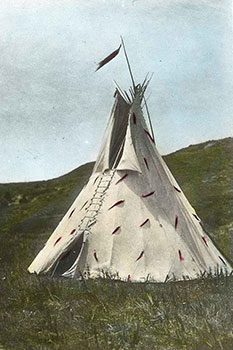
The thípi — tipi — was looked upon by nomadic hunters as “a good mother” who sheltered and protected her children in a secure and comfortable place.
Long before the Sioux, Cheyenne and other Plains tribes came to the grasslands, the tipi had been developed by Native Americans of the northern forests. They used a pole frame to create the conical shape and then covered the frame with birch bark, caribou hides or other natural materials.
The Native Americans of the Plains adapted adapted this basic structure to their own environment and pattern of living. An adjustment in the framework was made to accommodate the strong winds of the region. Buffalo hides sewn together with sinew became the usual covering.
The tipi was an ideal dwelling. Like the buffalo they hunted, they were constantly on the move. This meant their homes had to be readily transportable, too. A tipi was perfect for this. Historically, the tipi was made and owned by women. They were also responsible for taking them down and setting them up when moving from place to place. To move it, two ends of the supporting poles were tied to a horse. The other ends dragged along the ground, thus forming a roughly triangular frame, known as a travois, on which the buffalo covering and the family’s other possessions were tied.
At the new campsites, several long poles were bound together near the top of each tipi. The poles were then stood up and slanted outward from this center tie to form the outline of a cone. Other poles leaned against this framework to strengthen it and a covering of buffalo hide was draped over the frame. The covering was joined near the top with wooden lodge pins. The entrance to the tipi had closable flaps at the lower part of the seam of the buffalo hide. An opening was left at the very top to allow smoke from the fire to escape.
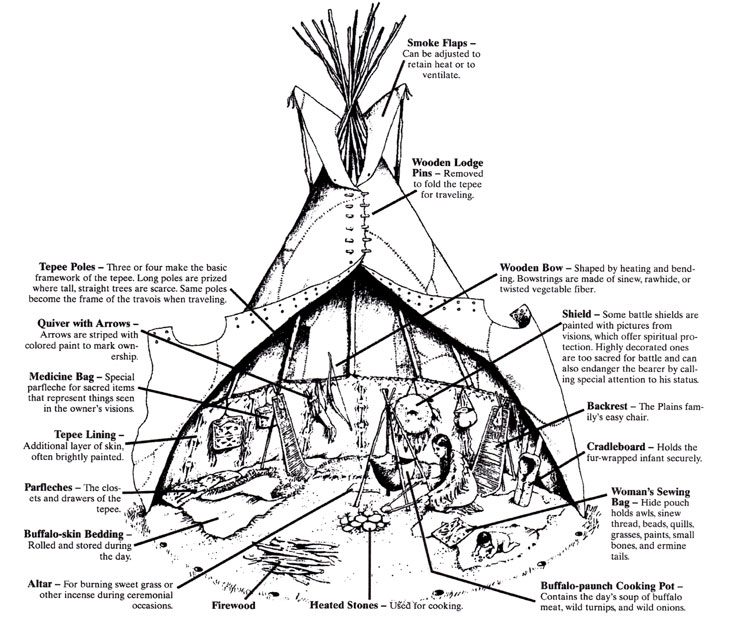
In hot weather, the flaps were left open, allowing the cool breeze to flow through the tipi. During winter, an additional hide lining was added to the tipi covering, providing insulation. The fire that burned in the center of the floor kept the tipi warm and provided heat for cooking.
Because of the strong, prevailing winds that swept across the Plains from the west, a tipi was set up with the entrance facing east. Likewise, the entire shelter was tilted slightly toward the east to streamline the rear, lessening the wind’s pressure on it.
A typical tipi was crowded. It contained hide bedding, a rug for a baby, willow-rod backrests, a cradleboard, a suspended cooking bag, firewood and parfleches — bags made from rawhide — containing food, medicine and other household necessities.
Sacred objects, weapons, a shield and other items were hung on the tipi lining. This lining was often painted with brilliantly colored designs, recalling past events in the lives of those who inhabited the tipi.
Inípi
Periodically throughout the year, our Native American staff and local Native American elders hold an Inípi for our students.
Inípi — The Rite of Purification
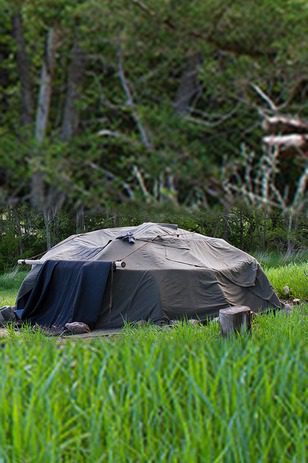
The inípi — sweat lodge — is the basic purification of the Lakota (Sioux) and several other Native American cultures. This practice can begin a ceremony, conclude a ceremony or can stand alone as a ceremony of its own.
The inípi lodge takes the shape of a dome and is constructed of 16 tree branches, preferably from the willow tree, and a canvas or hide cover. Due to its shape, some describe the lodge as a symbol of Mother Earth’s womb, from the top of the lodge to the circular shape below the earth.
Before the ceremony takes place, prayers are said and the lodge is purified with the burning smoke of sage and cedar.
Throughout inípi, participants sit in a circle. The ceremonial pipe is smoked while heated rocks are placed in the center of the fireplace. Water is poured over them to create steam. Songs are sung and prayers are offered by the participants.
The door to the lodge is opened four times to symbolize the four ages described by the White Buffalo Calf Woman. On the fourth time the door is opened, all participants emerge from the lodge, leaving behind all that is impure.
Periodically throughout the year, our Native American staff and local Native American elders hold an Inípi for our students.