Lakota Culture
Important Animals
Indigenous cultures, such as the Lakota (Sioux), carry precious knowledge about the world around us, including spiritual relationships with animals. They are considered our relatives, among our winged, four-legged and reptile nation.
In an attempt to explain the importance behind sacred animals, we have compiled cultural information about them. The following are five sacred animals to the Lakota.
Explore
Five Sacred Animals
The Buffalo
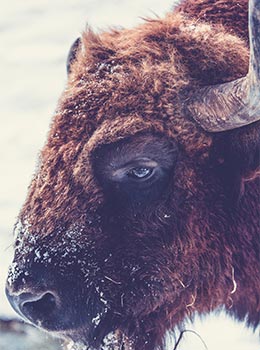
The tȟatȟáŋka — buffalo — is held in high regard by the Lakota people. It is respected as a symbol …
The Buffalo
Tȟatȟáŋka are respected as the sustainer of survival in the típi days of the Lakota.
The tȟatȟáŋka — buffalo — are held in high regard by the Lakota people. It is respected as a symbol of the divine because for Native Americans, the buffalo was a “banquet” for the people.
The buffalo — tȟatȟáŋka — gave up its own flesh and life to feed the Native American people. It provided for their every need by way of sheltering them with its hide over their típis; covering their bodies as clothing and their feet as moccasins.
For the Native Americans, the buffalo also provided everyday utensils such as needle and thread, awls, bowls and more. In this way, the tȟatȟáŋka — buffalo — was a true relative for the people — making life possible.
Because of the American buffalo’s great importance to the people, a buffalo symbol or skull is present in all sacred Lakota rituals. It stands as a reminder of this great animal which gives completely of itself for others.
The buffalo is a symbol of self-sacrifice; it gives until there is nothing left. This was imitated by the people in their lives. To be generous and give what you have to others in need, or to honor them, is one of the most highly respected ways of behaving.
The Uses of the Buffalo
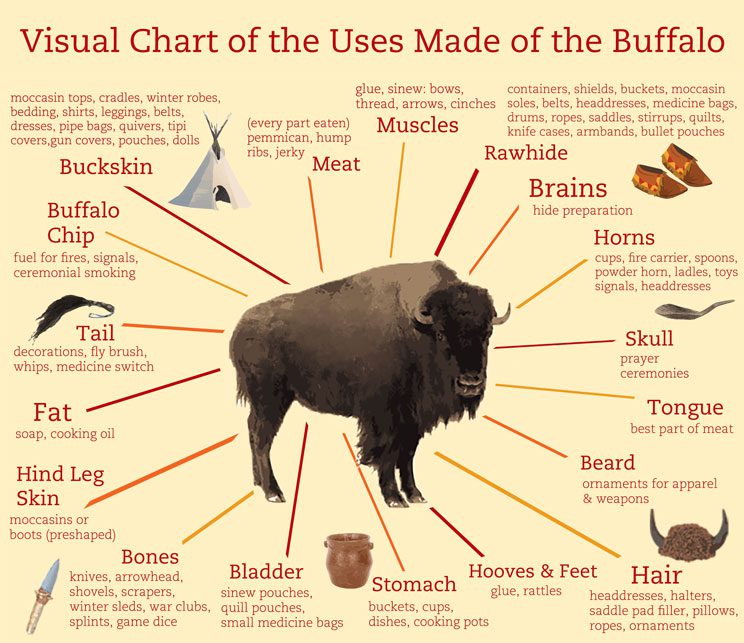
Adapted from Ron Zeilinger’s Lakota Life.
The Eagle
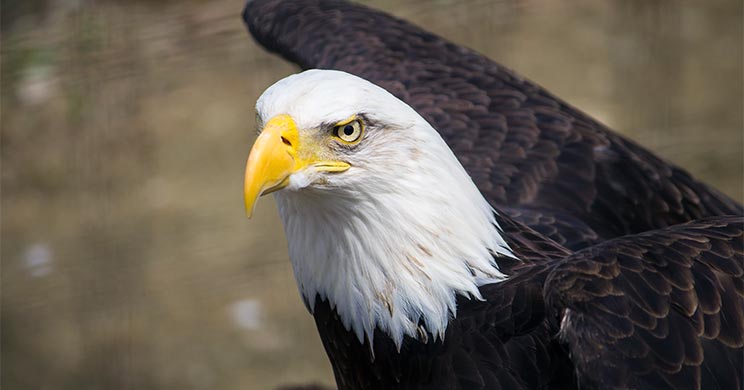
The waŋblí — eagle — is an important winged symbol for the Native American people. The eagle is the strongest …
The Eagle
In Native American culture, the eagle is an important symbol.
“In an eagle there is all the wisdom of the world. — Lame Dear”
The waŋblí — eagle — is an important winged symbol for the Native American people.
The eagle is the strongest and bravest of all birds. For this reason, Native Americans have chosen the eagle and its feathers as a symbol of what is highest, bravest, strongest and holiest.
In the Native American culture, eagle feathers are given to another in honor, and the feathers are worn with dignity and pride. They are treated with great respect.
When an eagle feather is dropped during a Native American dance, a special ceremony is performed to pick it up again, and the owner is careful to never drop it again.
An eagle feather is also used to adorn the sacred pipe because it is a symbol of the Great Spirit who is above all and from whom all strength and power flows.
Since the eagle holds high meaning in the Native American culture, eagle feathers and wings are used in special ways. For instance, when they are held over someone’s head, it means the person is brave or is wished bravery and happiness. To wave it over everyone present means everyone is wished peace, prosperity and happiness.
Story adapted from Ron Zeilinger’s Lakota Life.
The Dog
The šúŋka — dog — has long played an important role in Lakota society and culture. The Lakota (Sioux) relied …
The Dog
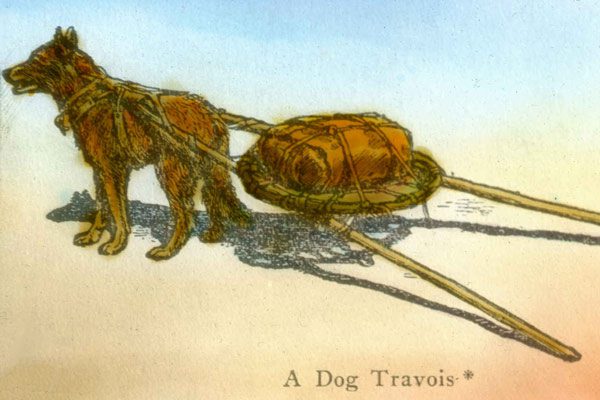
The šúŋka — dog — has long played an important role in Lakota society and culture. Before the arrival of the horses to the Great Plains, the Lakota (Sioux) relied heavily on dogs for a variety of tasks.
Dogs helped transport heavy loads by pulling travois, or drag sleds. These sleds were made in a similar way as the horse travois, but much smaller. They consisted of two wooden poles with a platform or basket suspended between them which was then attached to the back of the dog. The travois were used to move meat back to the village after a successful hunt. They were also used to help move campsites as the village followed buffalo herds — the tribe’s main protein source of food.
Along with being useful hunting and traveling companions, dogs took on several other roles. They watched over the children, helped keep people warm during the winter and warned the camp of intruders. They also alerted the Lakota of the dangers of rattlesnakes and other predators nearby. Simply put, they were part of the Lakota family and accepted their role with pride. Much could be learned from the companionship of our four-legged relative, such as humility and friendship.
For these reasons and more, the dog was considered sacred and greatly respected among the Lakota.
Today, the Lakota people still seek companionship with dogs — including the students at St. Joseph’s Indian School. St. Joseph’s implemented a dog program in 2017 called HAPI (Houseparents And Pets In) Homes. This program allows houseparents and other staff members the opportunity to bring their dog to campus to give students the opportunity to learn the life skill of properly caring for an animal. Also, not every student has had positive encounters with dogs because of the common stray dog issues in reservation communities. This program allows for space to repair any negative feelings toward dogs from past experiences and work toward healing for the future.
The Horse
To the Lakota, a šúŋkawakȟáŋ — horse — is a relative. A four-legged friend and companion that provided transportation, friendship …
The Horse
To the Lakota, a šúŋkawakȟán — horse — is a relative. A four-legged friend and companion that provided transportation, friendship and pride. The horse is revered for its grace and bravery.
When the horse arrived to the Great Plains region, the Lakota named them šúŋkawakȟán, which translates to mysterious or sacred dog. A bond was formed between the Lakota people and the horse that still remains strong to this day. The human and horse are closely linked in Native American culture.
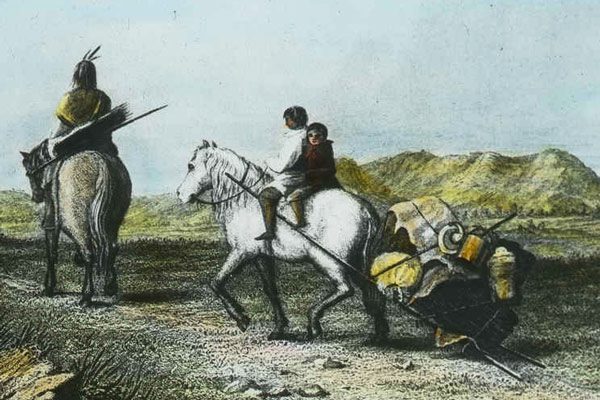
The Lakota were nomads. Where the tȟatȟáŋka — buffalo — went, so did the Lakota. Horses made this nomadic lifestyle of moving from place to place much more efficient. Before the Lakota had horses, they had only the šúŋka — dog — and themselves to carry heavy loads, such as the típi. Horses, with their strong stature, eased the moving process significantly.
Horses also revolutionized hunting and warfare. Horses gave men speed they had never had before, and the ability to get as close as possible to a running buffalo, or an enemy in war.
Because of its great impact on the Lakota way of life, the horse was highly respected. For special occasions, such as a ceremony or war, a horse might be painted with symbols that were important to its owner. Some also decorated their horse’s bridles, saddles and saddle bags with beadwork or quillwork.
Native Americans honored horses by incorporating them into their cultural and spiritual lives, and by creating art that honored the bravery and grace of the horse. Many ceremonies were based on the horse and its contributions to Native American life.
Today, although life is vastly different from the days of nomadic living, the bond between Native Americans and the horse has remained strong. Lakota people still look to the horse to provide healing from trauma, anxiety, and mental and emotional distress, among others. This fact led St. Joseph’s Indian School to establish an equine therapy program in 2018. To learn more about this program and how horses are helping Lakota boys and girls at St. Joseph’s Indian School, please visit www.stjo.org/horses.

The Turtle
The khéya — turtle — is present in a multitude of stories, legends and observations of the Lakota people. The …
The Turtle
The khéya — turtle — is present in a multitude of stories, legends and observations of the Lakota (Sioux) people.
One of these observations, for example, has to do with the scales on the turtle’s shell and the number of months in a year. Based on certain star constellations in the night sky that appeared during different seasons, the Lakota identified 13 moons throughout the year. This led to them creating their yearly calendar, which contained 13 months — each having 28 days.
The Lakota also observed some creatures on Earth reflected the same or similar natural phenomena. Like the number of moons and days each moon is present, the turtle has 13 large scales on its back, and 28 small scales around the shell — mimicking the monthly moon pattern. Because of this and other natural occurrences, the turtle became an important symbol in Lakota society.
The spirit of the turtle represents the guardian of life, longevity and fortitude. This is why the shape of a turtle was chosen to be made into an amulet. An amulet is a leather pouch decorated with beads to store a newborn’s umbilical cord. Once the newborn’s umbilical cord fell off, it was stored inside the amulet for safekeeping. Turtle shaped amulets were given to newborn baby girls and agléška — lizard — shaped amulets were given to the boys.
The amulets were put away until the children matured enough to take care of them and treat them respectfully. They were then brought out for ceremonies and special occasions — often pinned to ceremonial dress.